
Scope
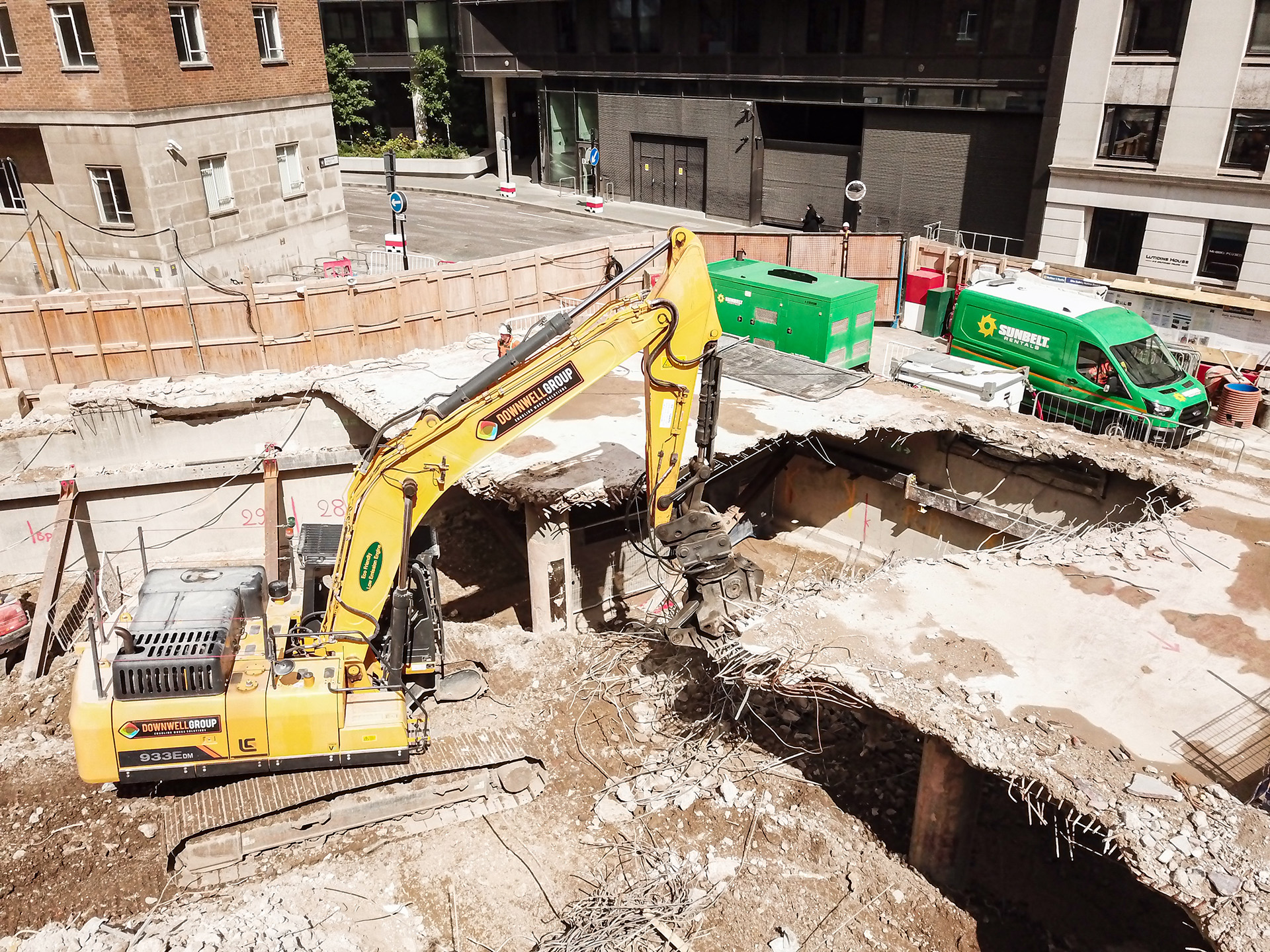
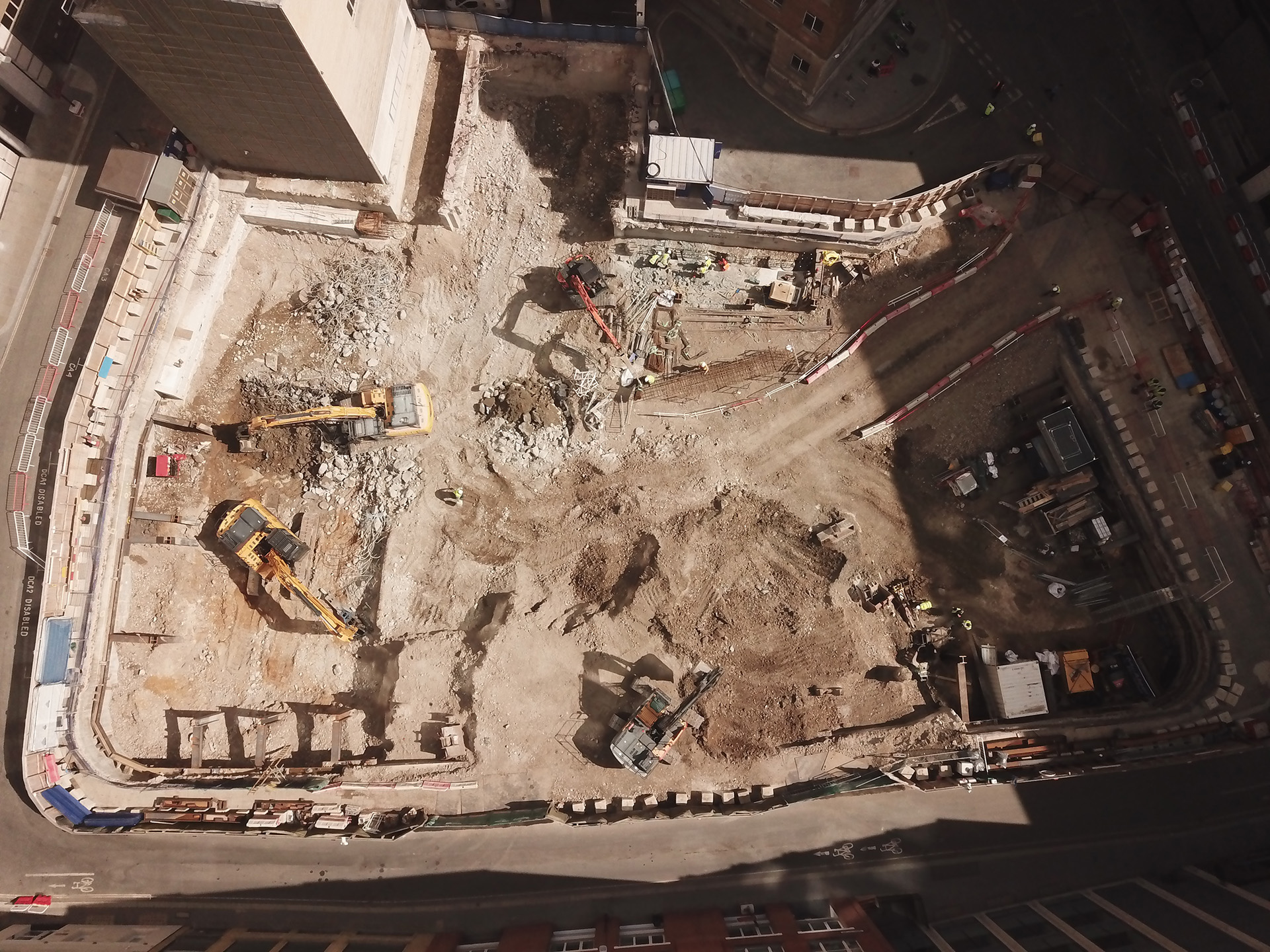
Crutched Friars marked Downwell Enabling’s first project with new client McAleer & Rushe, involving complex substructure and piling enablement works within the City of London. The works included:
- Controlled breakout and removal of existing substructure and deep raft concrete slab
- Preparation and installation of piling platforms across restricted site areas
- Provision of all necessary attendances to support follow-on piling operations
- Coordination of logistics and materials movement within a highly constrained urban site
- Strict adherence to City of London regulations and Section 60 working hour restrictions
- Continuous engagement with neighbouring properties and contractors to maintain operational harmony
Challenges and Expertise
Working within an extremely confined city centre site required meticulous planning and constant communication with multiple contractors. The removal of the existing deep raft slab adjacent to an active tower crane base demanded precision and continuous monitoring to prevent undermining. Downwell’s team successfully managed these risks through close coordination, enhanced supervision and rigorous safety controls.
Outcome
The project was delivered safely, on programme, and without disruption to surrounding properties or operations reinforcing Downwell’s reputation for precision and reliability in complex urban environments.